




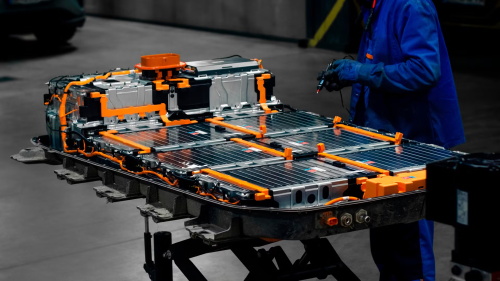
Electrification promises a lot: cleaner air in cities, quieter streets, and a pathway away from fossil fuels. But beneath the glossy ads for electric cars and the thunder of charging-station rollouts lies a more complicated story — one of finite minerals, dirty mines, fledgling recycling systems, and trade-offs that can shift environmental burdens rather than eliminate them. If we want electric vehicles (EVs) to be a genuine climate and public-health win, we need to be honest about these hidden costs and fix the weak links in the chain: mining, material processing, battery production, end-of-life handling, and policy.
1. What’s really in an EV battery (and why it matters)
Most mainstream EVs use lithium-ion batteries made from chemistries that include lithium, nickel, cobalt, manganese, and graphite — sometimes with other additives. The exact mix varies:
NMC (nickel-manganese-cobalt) and NCA (nickel-cobalt-aluminum) chemistries offer high energy density, favored for long range.
LFP (lithium-iron-phosphate) uses no nickel or cobalt and is gaining ground for lower cost and improved safety, though traditionally it has lower energy density.
Solid-state and other emerging batteries aim to change the mix, but commercialization is still underway.
Why this matters: these metals aren’t evenly available worldwide, and their extraction and refining can be carbon-intensive, water-hungry, and socially fraught. As EV adoption scales, demand for these elements could stress supply chains and create new environmental pressures.
2. Rare-metals supply — not as simple as “more mines”
The public often imagines that more mines will solve the problem. But expanding supply is not a clean, frictionless process.
Geography and geopolitics. A handful of countries dominate different parts of the supply chain. For example, lithium brines are abundant in parts of South America, hard-rock lithium in Australia, cobalt is largely sourced from the Democratic Republic of Congo (DRC), and refining capacity for many metals is concentrated in certain countries. High concentration creates geopolitical risk and supply vulnerability — and it means that environmental or labor standards in a few places can have outsized global impacts.
Time lag to develop mines. Mining projects take years — often a decade — to move from discovery to production due to permitting, community consultation, engineering, and financing. So even if demand forecasts are clear, supply can't flex quickly.
Hidden environmental costs. Mining and refining can cause deforestation, biodiversity loss, soil and water contamination, and large greenhouse-gas emissions — especially where low-emission energy sources are not used for processing. Water use is a major concern in arid areas; lithium extraction from brines, for instance, can compete with local agricultural or community water needs.
Social concerns. Mining regions can face human-rights problems, poor labor conditions, and community displacement. The cobalt supply chain has been scrutinized for child labor and unsafe labor practices, highlighting that material supply ethics cannot be ignored.

3. Recycling — the weak link, and the biggest opportunity
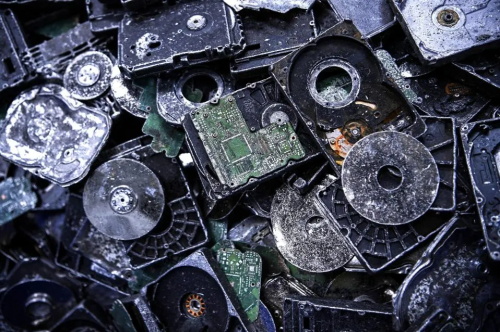
If we want to reduce reliance on newly mined materials, recycling is where the biggest gains can be made. But current recycling systems are immature compared with the scale of the expected battery waste stream.
Why recycling is hard:
Batteries are complex and diverse. Different manufacturers use different chemistries, formats, and battery-management systems. That diversity makes standardized recycling processes more difficult.
Disassembly is labor-intensive and potentially hazardous due to residual charge and thermal risks.
Economics don’t always add up. Recovering metals costs money, and if raw metal prices are low, recycling revenues may not cover the cost of collection and processing — unless policies or design changes support it.
Two main recycling approaches:
Pyrometallurgical processes (smelting): robust and used today, but energy-intensive and often fails to recover lithium efficiently.
Hydrometallurgical processes (chemical leaching): can recover a broader array of metals (including lithium) at higher yields, but require chemical handling and wastewater management.
State of play: Recycling rates for end-of-life EV batteries remain low globally today because many EVs haven’t yet reached end of life and because infrastructure and regulatory incentives lag. But as volumes ramp, recycling could supply a large share of future metal demand — if properly incentivized.
4. Lifecycle thinking: electrification shifts impacts, it doesn’t always eliminate them
A common mistake in public debate is to think of emissions or pollution only at the tailpipe. True lifecycle assessment (LCA) counts emissions and impacts from ore to wheel:
Upstream: mining, ore processing, manufacturing of battery cells.
Use phase: emissions depend on the electricity mix used for charging. Charging from renewables is much cleaner than charging from coal-dominated grids.
Downstream: battery reuse (second life), recycling, and disposal.
Often, an EV's operational emissions are lower than an internal combustion engine (ICE) car’s, especially in regions with cleaner grids. However, the manufacturing phase of EVs — notably the battery — yields higher upfront emissions and environmental impacts. Over the vehicle’s lifetime, the EV can still come out ahead on greenhouse gases, but that advantage is sensitive to battery size, grid energy mix, vehicle lifetime, and manufacturing emissions intensity.
Moreover, environmental impacts like water use, ecological disturbance, and chemical pollution are not always captured fully in greenhouse-gas–centric assessments. So an EV can reduce CO₂ emissions but still generate significant local environmental harm if materials are extracted irresponsibly.
5. Battery design and circularity: design choices matter
Designers and automakers can make EVs easier to recycle and less dependent on problematic metals:
Design for disassembly. Standardized modules and accessible battery packs simplify safe removal and recycling.
Use of less-problematic chemistries. Shifting to low-cobalt or cobalt-free chemistries (or LFP where appropriate) reduces dependency on conflict-prone minerals.
Modular packs and second life. Batteries often retain substantial capacity after vehicle use and can be repurposed for grid storage, delaying recycling and extracting more service per unit of material.
Material substitution and innovation. Research into sodium-ion, solid-state, and other chemistries could relax pressure on certain metals, though scaling new chemistries has its own challenges.
The fragmented auto industry needs standards and collaboration to scale these design changes.
6. Policy levers — the lever set we should use
Market signals alone won’t fix the hidden costs. Thoughtful policy can reduce negative trade-offs and accelerate circularity.
Extended Producer Responsibility (EPR): Make manufacturers responsible for collection, recycling, or safe disposal of batteries. This aligns incentives for designing recyclable batteries.
Minimum recycled content requirements: Mandate that a certain share of battery raw material come from recycled sources — stimulating demand for recycled metals.
Scrap and recycling subsidies and tax credits: Support the economics of recycling to make it competitive with virgin mining.
Stronger supply-chain transparency and due diligence laws: Require disclosure of material origins and human-rights safeguards, reducing demand for problematic supply sources.
Invest in domestic refining and recycling capacity: Diversify refining and recycling to reduce geopolitical concentration.
Standards and labeling: Standardize battery formats and labeling to ease collection and processing.
Policy should be careful to avoid perverse outcomes — for example, pushing for rapid electrification without recycling programs risks creating a large waste problem a decade hence.
7. Consumer choices and fleet management matter
Consumers and fleet operators can influence the lifecycle impacts:
Right-sizing batteries. Choosing a battery for actual driving needs reduces material use per vehicle. Many drivers rarely need maximum range.
Vehicle lifetime extension. Keeping EVs on the road longer increases the amortized environmental benefit of their manufacturing footprint.
Second-life markets. Institutional buyers and utilities can buy used batteries for stationary storage, extending value and postponing recycling.
Responsible charging. Charging during low-carbon hours or using behind-the-meter renewables reduces use-phase emissions.
Fleet operators (ride-hailing, delivery services) are particularly important because they turnover vehicles faster and can scale second-life and recycling practices quickly.
8. Practical recommendations — what industry, governments and citizens can do now
For industry
- Prioritize battery chemistries with lower social and environmental risks where feasible (LFP for city cars, for instance).
- Design batteries for disassembly and standardize formats.
- Invest in closed-loop recycling R&D and in partnerships with recyclers.
For governments
- Enact EPR and recycled content rules.
- Use procurement power to demand recycled content and responsible sourcing.
- Fund recycling infrastructure and workforce training, especially in regions expected to see large battery flows.
For consumers
- Choose vehicles sized to your needs.
- Keep cars longer when possible and support repairability.
- Ask automakers about battery sourcing and recycling commitments.
9. The long view: electrification is necessary but incomplete
Electrification of transport is a cornerstone of decarbonization. It is necessary. But necessary doesn’t mean sufficient. If EV scaling simply shifts pollution from tailpipes to mines and landfills — or locks us into socially damaging supply chains — we will have traded one set of problems for another. The good news: many fixes exist and are tractable. Better battery design, robust recycling, second-life markets, diversified and transparent supply chains, and smart policy can together make electrification significantly cleaner and more equitable.
Ultimately, the goal should be a circular mobility system: vehicles and batteries designed to last, to be reused, and to have their materials continuously cycled back into new products. That’s how electrification will deliver not just reduced emissions, but true environmental and social improvement.
10. Quick checklist for readers (what to ask / look for)
- Does the automaker disclose battery sourcing and recycling plans?
- Is the car’s battery chemistry cobalt-heavy, or is it LFP / low-cobalt?
- Does the manufacturer offer take-back or participate in recycling programs?
- Can the battery be repurposed for second-life applications?
- Are there credible third-party certifications for responsible sourcing?
If more automakers, policymakers and consumers start asking these questions — and acting on the answers — the hidden costs of electrification will shrink. Electrification is a huge opportunity. With the right choices, we can make it a truly sustainable transformation.

What Happens When Your EV’s High-Voltage Components Need Repair? A Technician’s View
Retro-Fit EV Kits: Turning Your Old Internal-Combustion Vehicle into Fully Electric — Is It Practical?
Why Lightweight Alloys Are Making a Comeback in Mass-Market Cars
Why Some Automakers Are Charging for Safety Features: The Ethics of Pay-For-Protection
How Used EV Batteries Are Repurposed for Home Energy Storage — Case Studies Around the World
Which Technologies Will Define the Next Decade of Mobility? A Deep Dive into 2030+